
https://www.asorry.com/pumas-1999-icons-reimagined-a-deep-dive-into-the-speedcat-and-mostro/
Some shoes are destined to be a passing cloud in the window, while others can shuttle freely between the roar of the track and the flash lights. The PUMA Speedcat belongs to the latter. From its birth in the F1 pit in 1999 to its return to the trend spotlight in an all-white limited edition at the Miami Grand Prix in 2025, this pair of shoes has taken an amazing trajectory – not only reshaping the definition of racing shoes, but also heralding a future where sports and fashion dance together.
It all starts with speed: the racing pedigree of the Speedcat
To truly understand the spirit of Speedcat, you have to go back to its origins – the world of Formula 1. In the 1980s, PUMA handcrafted custom shoes for legendary drivers such as Stefan Bellof, Christian Danner and Gerhard Berger. These shoes were never sold to the public and were born only for the track. In the late 1990s, PUMA decided to turn this technological accumulation into a real product and designed the first professional racing shoe specifically for the Jordan F1 team.
This also laid the foundation for the official birth of Speedcat in 1999. It is a high-performance shoe designed for F1 drivers. The low-top profile fits the driving posture, the lightweight material ensures a sensitive foot feel, and the upper is soft and fits for quick movements. Speedcat was not originally born for the streets, but its shape, profile and technology laid the groundwork for its subsequent transformation.
From the pits to the clubs: the evolution of a style icon
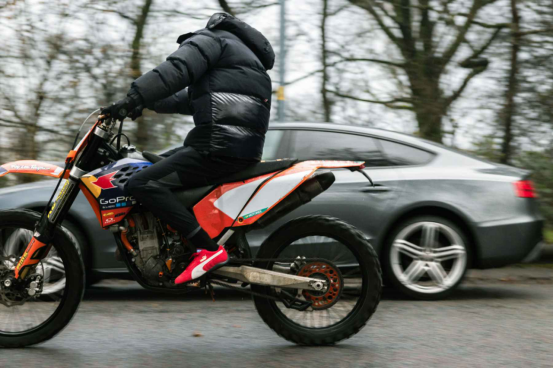
In 2000, PUMA launched the first Speedcat low-top and mid-top models for the general public; two years later, the PUMA Cat embroidered pattern appeared on the toe for the first time. This pair of shoes, which originally belonged only to the F1 pits, began to attract the attention of street fashionistas.
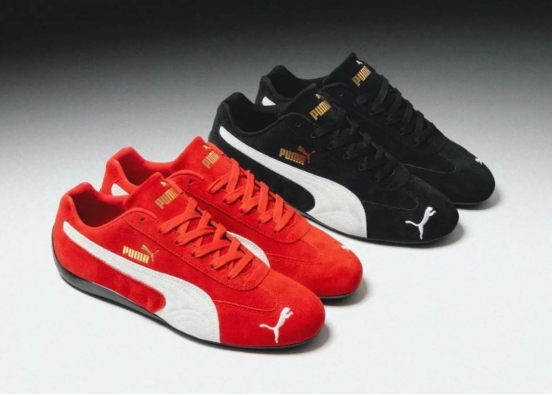
Its aesthetics are so avant-garde yet low-key: the smooth lines, the strong wrapping body, the retro texture brought by the suede material, and the “incredible” low-top design, which quickly made it go from the track to street fashion culture. After Michael Schumacher also appeared in the public eye wearing Speedcat after get off work, it began to appear frequently in nightclubs, skate shops and street photographers.
Market conquest: from racing equipment to trendy items
The Speedcat’s popularity was no accident. In the first few years of the new century, its unique appearance became the secret fashion code of the Y2K generation. In repeated experiments with materials such as leather, nylon, patent leather and even horse hair, the shoe continued to upgrade itself. By 2010, it had sold more than 28 million pairs. For a racing shoe that was once exclusively used in pits, this is simply a cultural overtaking.
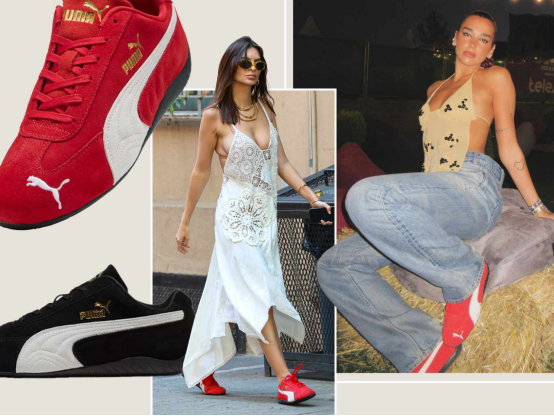
Speedcat is not trapped in the “retro” label, but closely follows the shift in the spirit of fashion. When the Y2K style made a comeback in the early 2020s, low-rise jeans, small handbags, and retro sneakers returned to the streets, Speedcat once again became the darling of the spotlight. Bella Hadid, A$AP Rocky, Central Cee, Blackpink’s Jennie… This pair of shoes captured not only F1 fans, but also the most discerning fashion stylists.
2025: Miami’s renaissance and a new chapter of minimalism
In 2025, Speedcat once again stands at a historical node. PUMA and the Ferrari team launched a limited edition joint model for the Miami Grand Prix. The all-white leather upper is simple and almost abstract, but the laces and insoles are decorated with translucent and bright colors. The details echo the tropical atmosphere of Miami. This is not only a tribute to the original Speedcat, but also a proposal for its future design language.
“We wanted a lightweight shoe,” explained Adrian Cuevas, PUMA’s racing shoe product line manager, “with a clean white upper, but with details on the laces, outsole and insole to embed emotion and regionality.” The shoe was sold out online instantly after its release, becoming a versatile shoe that can be paired with both a suspender skirt and overalls.
In addition, the series also includes Speedcat Pro racing boots used by Ferrari drivers Leclerc and Hamilton, but what really makes the fashion circle crazy is the OG replica that can be worn on the street.
Simplicity is speed: a low-key triumph of design
In the context of contemporary sneakers dominated by heaviness, noise and extreme branding, Speedcat stands out with its simplicity, closeness to the ground and high recognition. There is no fancy air cushion structure, nor a super-technical future sole. It returns to a performance aesthetic of “feel first” – paying tribute to the racing culture, and visually representing a simple and confident lifestyle.
It did not gain attention through high-profile releases or hype, but rather through a texture that “feels the speed without explanation”, winning dual recognition from the streets and the catwalks.
Conclusion: Never left, just seen again
The charm of Speedcat has never been whether it is popular or not, but that it has never really disappeared. When you wear this pair of shoes, whether it is paired with vintage jeans or a tailored suit, it quietly tells a story: about speed, control, identity, and an aesthetic that stands firm in the cycle of trends.
In 2025, it is not a return, but a restart.
https://www.asorry.com/pumas-1999-icons-reimagined-a-deep-dive-into-the-speedcat-and-mostro/