
https://www.asorry.com/the-ultimate-puma-running-shoe-guide-from-80s-retro-classics-to-elite-carbon-racers/
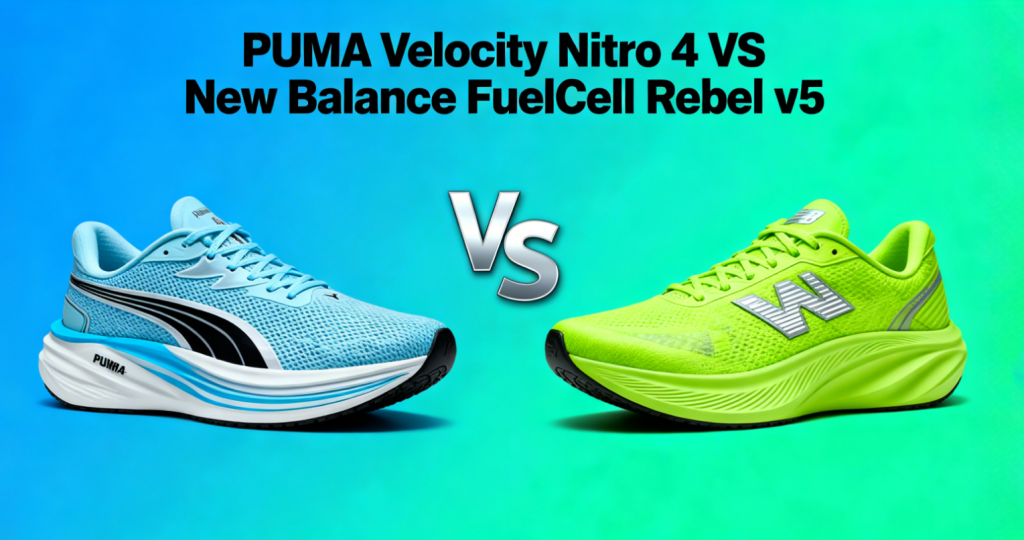
In the arena of professional training shoes, I’ve always paid special attention to the rivalry between PUMA and New Balance . For runners, this is no longer just a battle of brand recognition, but a direct dialogue about
technological innovation and the running experience . Especially after personally trying out the PUMA Velocity Nitro 4 and the New Balance FuelCell Rebel v5 , I truly felt the distinct differences in their characteristics—one is lightweight and explosive; the other is stable and as smooth as flowing water.
These two shoes present a stark contrast in terms of midsole technology, performance, and the types of runners they are best suited for, which explains why they have become a hot topic in the running community.
If you want to gain a deeper understanding of running shoe performance, you might want to check out the “New Balance Running Shoe Performance Guide ,” which will help you quickly grasp the underlying logic of the brand’s technological system.
Next, I will take you through a comprehensive analysis of this interesting “training shoe battle” from three dimensions: technical configuration, running feel, and cost-effectiveness , to see which pair is more worthy of being your partner for your next long run.
Technology Configuration and Design Concept
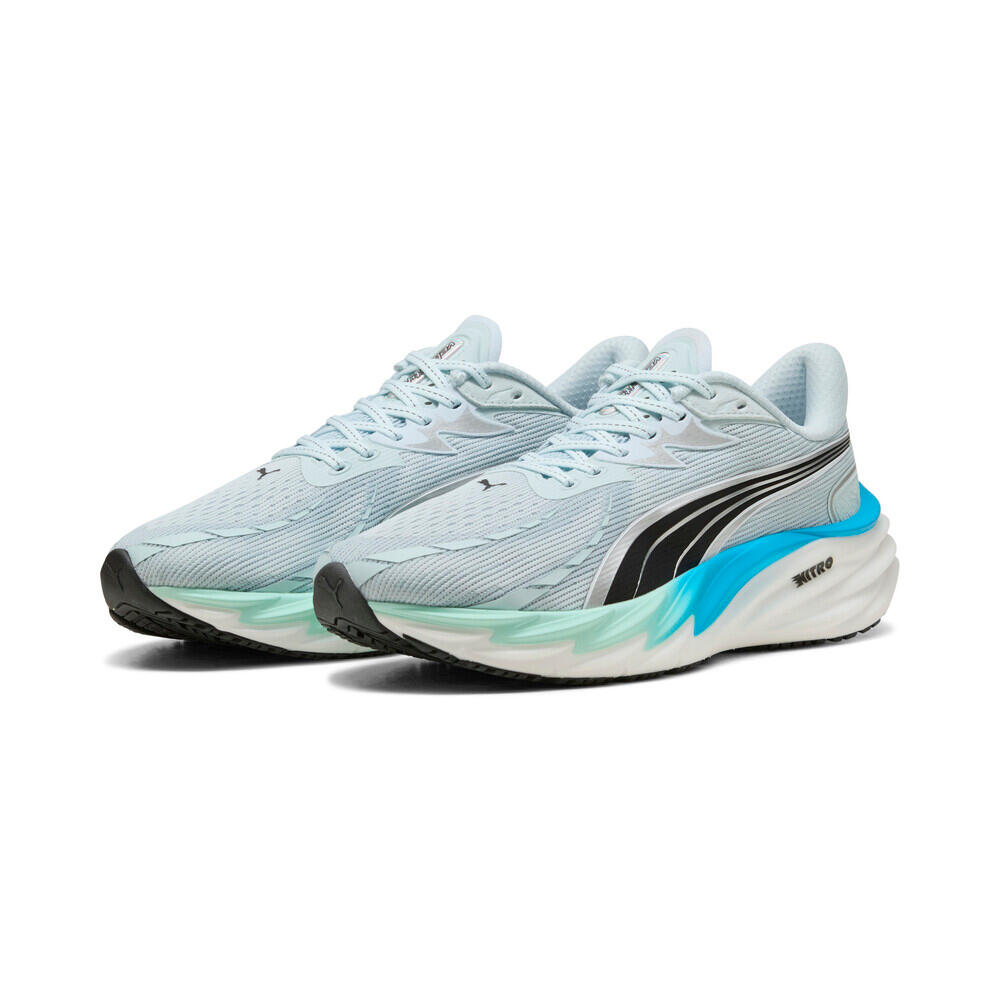
The PUMA Velocity Nitro 4 features the latest generation of NITRO™ nitrogen cushioning technology. This supercritical foam material, infused with nitrogen, combines softness with high rebound. The dual-density design provides comfortable cushioning in the upper layer of the sole, while the lower PROFOAM LITE layer ensures stability and durability. Combined with the PUMAGRIP rubber outsole, it maintains excellent traction on both wet and dry surfaces.
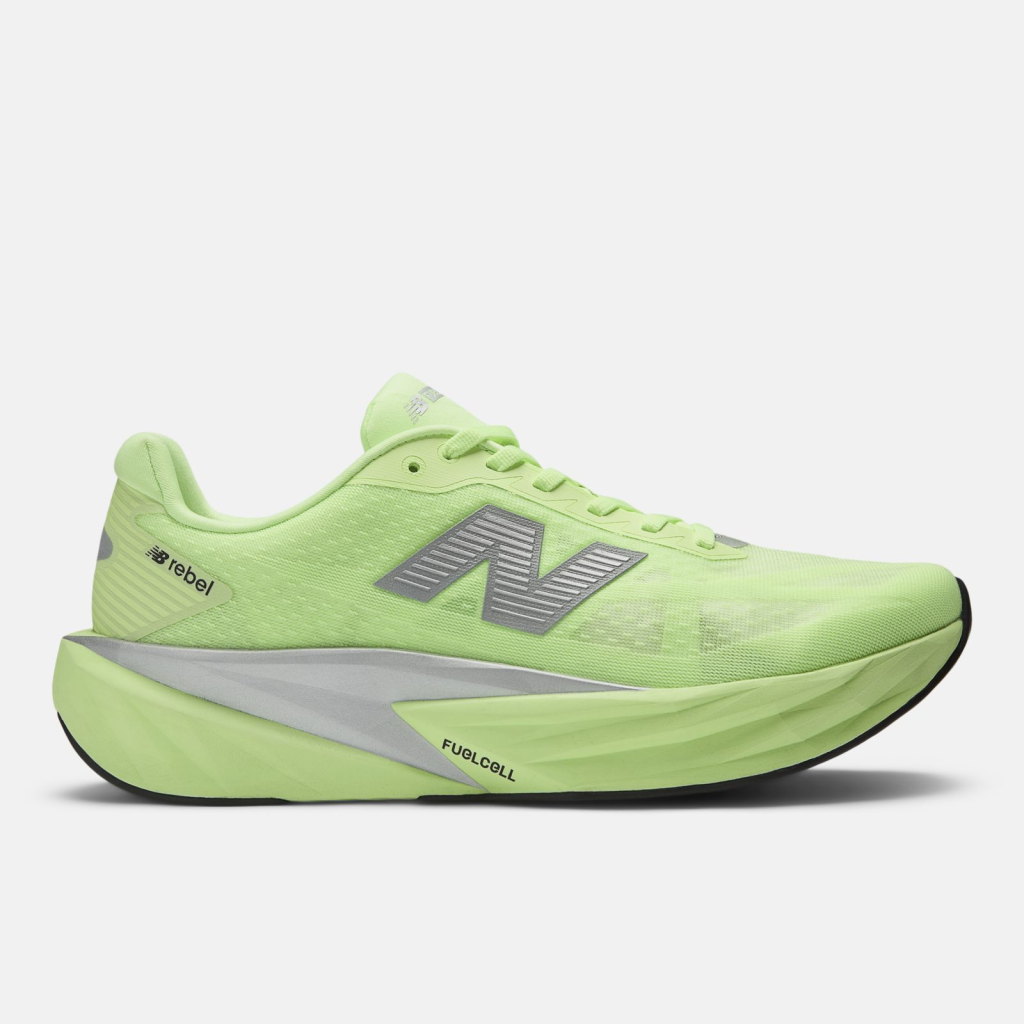
The New Balance FuelCell Rebel v5 continues its power-oriented design philosophy. The midsole utilizes FuelCell technology, constructed from a PEBA/EVA blend foam, providing a lightweight and responsive feel. Compared to its predecessor, the Rebel v5 features increased thickness for enhanced protection, while maintaining a weight of around 220g, making it a lightweight representative among speed training shoes.
Shock absorption and energy feedback
Real-world testing data shows that the two shoes each have their own strengths in terms of midsole performance.
The Velocity Nitro 4 excels in heel shock absorption and full-length support, making it suitable for runners who prioritize protection.
The Rebel v5 , with its forefoot FuelCell material, delivers excellent propulsion and rapid response, making it more suitable for tempo runs and interval training.
In terms of energy return, the Rebel v5 provides stronger propulsion when landing on the midfoot and forefoot; while the Velocity Nitro 4 offers a more balanced cushioning experience, suitable for daily training at various paces.
Stability and support
The Velocity Nitro 4 ‘s support system prioritizes ankle and midfoot protection, with a double-layer engineered mesh upper and reinforced heel design to keep runners stable over long distances.
In contrast, the Rebel v5 ‘s FantomFit technology upper prioritizes lightweight breathability and greater flexibility during high-speed runs, but offers slightly less lateral support.
Test data shows:
In slow running and long distances, the Velocity Nitro 4 offers better stability;
In tempo runs and interval training, the Rebel v5 offers a smoother transition and a lighter feel.
Applicable scenarios: Tailor-made for different runners
| Runner type | PUMA Velocity Nitro 4 | New Balance Rebel v5 |
| Beginner and intermediate runners | ✔ High stability and excellent shock absorption | — Emphasis on speed performance |
| Advanced runners | — Slightly bulky | ✔ Strong sense of propulsion and outstanding explosive power |
| heavier runners (70kg+) | ✔ Good protection | — Lightweight and lacks support |
| Forefoot running style runners | — Start up a little slower | ✔ More suitable for rhythm training |
The Velocity Nitro 4 is more like an “all-around training shoe,” suitable for daily cardio, recovery runs, and long-distance training; while the Rebel v5 is the ideal partner for speed runners, excelling in tempo runs and short-distance bursts.
Durability vs. Cost-Effectiveness: The Difference in Long-Term Use
Based on abrasion resistance test results, PUMA’s PUMAGRIP outsole has virtually no weaknesses, with a lifespan of 700–800 kilometers, significantly better than the Rebel v5’s 500–600 kilometers.
In terms of price range, the Velocity Nitro 4 is priced at approximately $120–$140, while the Rebel v5 is between $140 and $150. Considering both durability and versatility, PUMA offers better overall value.
Summary and Purchase Recommendations
Choose the Velocity Nitro 4 : If you prioritize foot protection, running comfort, and long-term training consistency, it’s a reliable daily mainstay.
Choose Rebel v5 : If you are pursuing speed and explosiveness, and focus on tempo runs and interval training, Rebel v5 will help you break through your pace plateau.
Overall rating:
| project | PUMA Velocity Nitro 4 | New Balance Rebel v5 |
| Shock absorption performance | ★★★★☆ | ★★★☆☆ |
| Energy Feedback | ★★★☆☆ | ★★★★★ |
| stability | ★★★★★ | ★★★☆☆ |
| Durability | ★★★★★ | ★★★☆☆ |
| Cost-effectiveness | ★★★★★ | ★★★★☆ |
Ultimately, the Velocity Nitro 4 slightly edged out the competition with an overall score of 8.8/10. However, from the perspective of the running ecosystem, the competition between PUMA and New Balance has driven the rapid evolution of training shoe technology and given runners more diverse choices. Whether you prioritize stability or speed, finding the right pair for you is the true victory for a runner.
https://www.asorry.com/the-ultimate-puma-running-shoe-guide-from-80s-retro-classics-to-elite-carbon-racers/